




Rooms, traits and power-ups
 In a Run
Procedural organs, sealed doors and genes, special rooms and room traits, traits across seven tiers, shot synergies, elemental power-ups, CRISPR and extra lives. No two runs play the same.
How it plays
Steer, dodge, let it fire
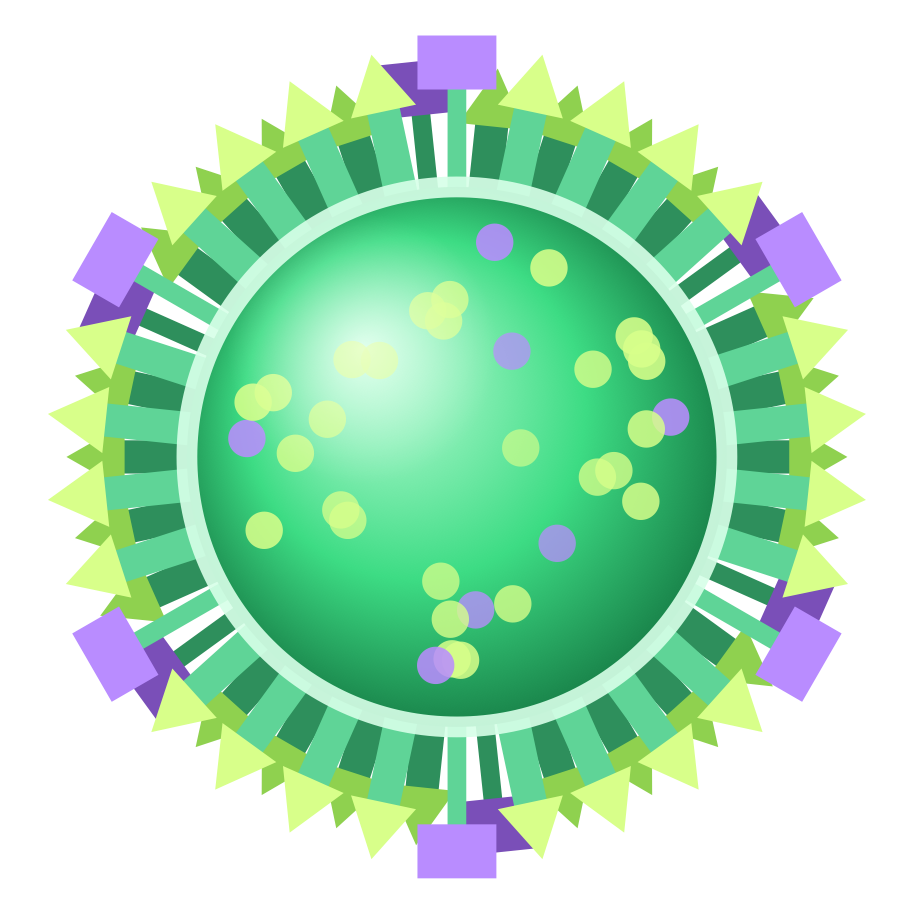
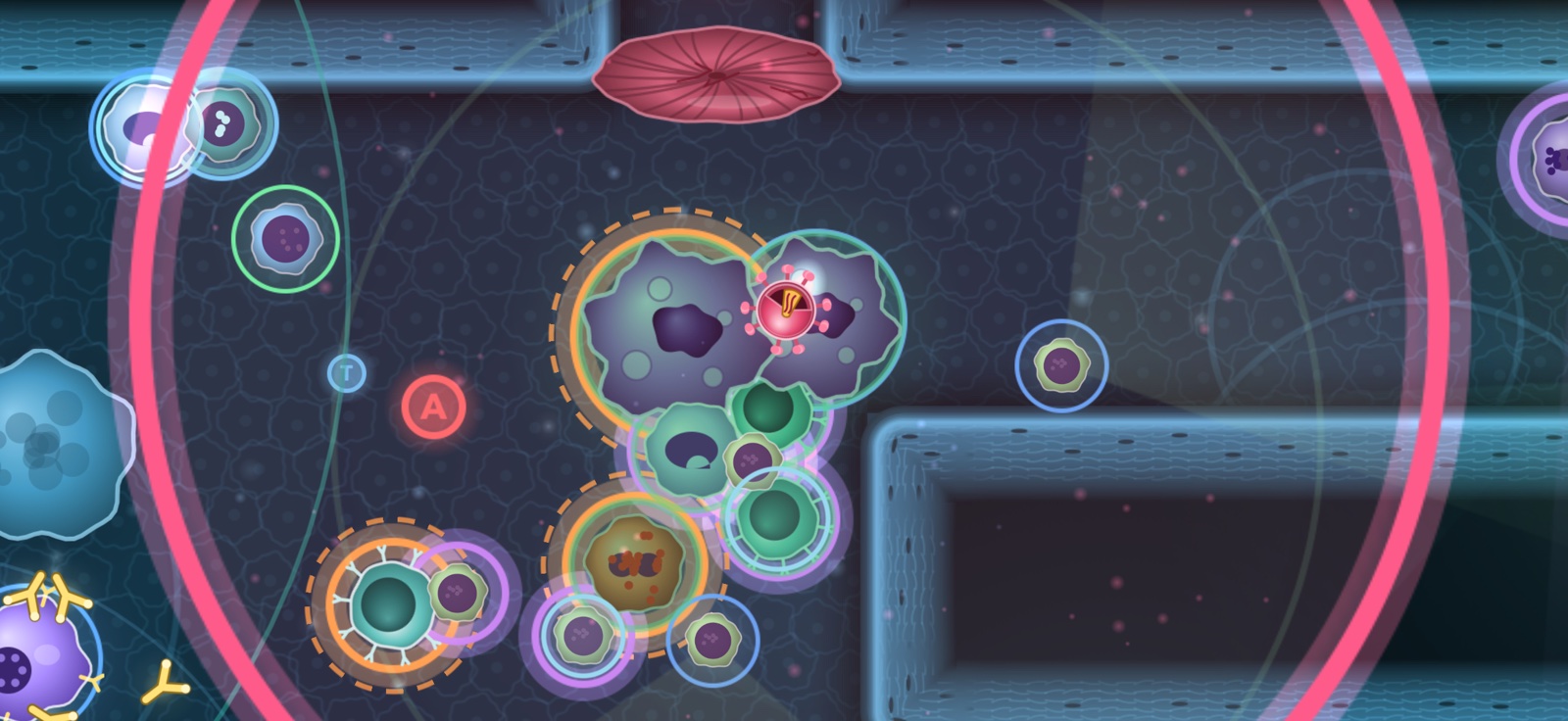
You steer and your virus aims and fires by itself, so every run is about where you stand. Dash out of trouble, catch cells before they notice you, and save your signature move and ultimate for the moments that matter. Your health, how alert the immune system is and your buttons sit around the edges of the play window, and touch, keyboard, mouse and controllers all work.
- Auto-attack: Shots go to the nearest cell you can see, never through tissue walls.
- Ambush: Hitting a cell before it notices you deals heavy bonus damage.
- Dash: Nothing can hurt you mid-dash, and it carries you over pits.
- Charged moves: Kills charge your signature move, while hits and kills both charge your ultimate.
- Active skill: Equip one from the skill tree and it gets a button of its own.
The map
Room by room, organ by organ
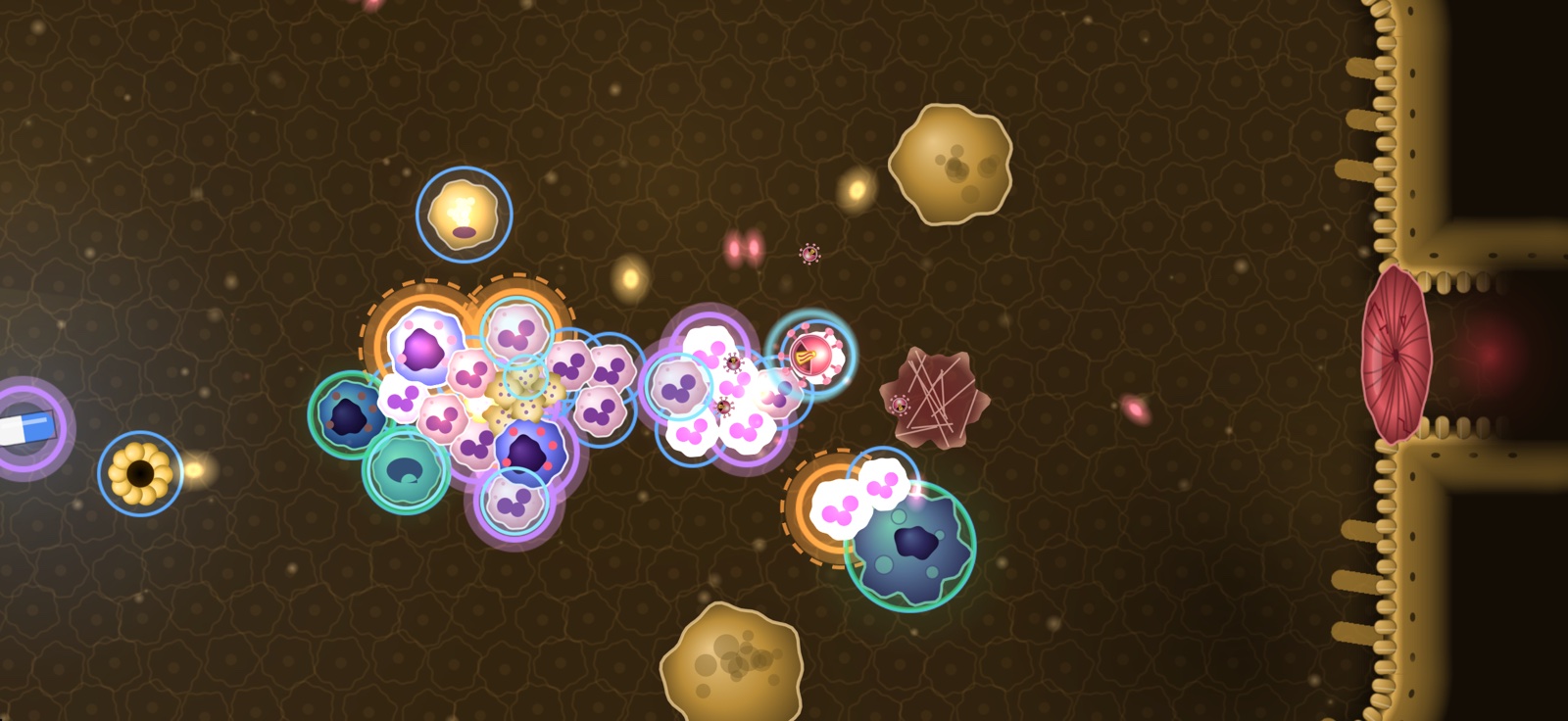
Each organ is a branching map of rooms built fresh every run, with its boss waiting at the deepest dead end. Fight rooms come in many shapes, from L-bends and crosses to rings and octagons, walled in the organ's own living tissue, and their doors clench shut while you fight. Beat the boss and you descend for good, from the Nasal Passage all the way to the Brain, and the deeper you push in one run, the tougher the cells get. Every organ has its own tissue hazards, and they hurt cells just as readily as they hurt you.
- Starting point: Once unlocked, start in any organ you've reached, with a head start trait draft.
- Waves: The first wave hasn't noticed you yet, but reinforcements arrive already hunting.
- Pits and shafts: Dash over pits, or drop down a shaft into a reshuffled layout.
- No way back: Loot left on the floor stays behind when you descend, and a living tumor follows you down.
- Growing runs: As you level up, rooms grow and new systems arrive, one per run.
Side rooms
Rooms with their own rules
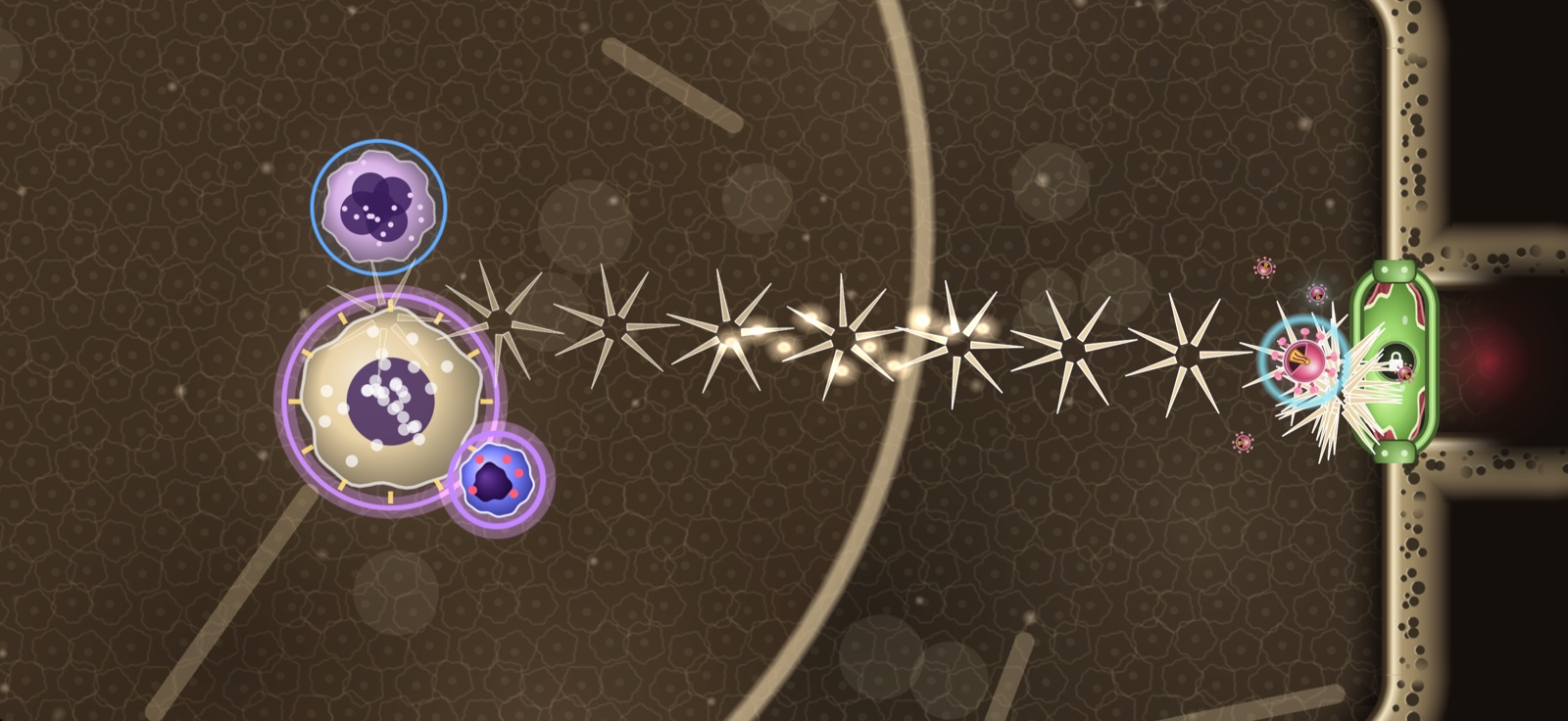
Not every room is a fight. Every organ has a Mutation Chamber with a free trait and a Gene Chamber, where a key guardian holds the gene that opens a sealed door. As you level up, puzzles, bargains, timed events and tumors join the map, and later rooms roll tiers that add boons and drawbacks.
- Sealed doors: A key guardian's gene opens them, and it also gives you a perk for the run.
- Altars: Take one strong bargain that comes with a price, or simply walk away.
- Event rooms: Hold out through a siege, pay health for a random trait, or rest in a refuge.
- Safety net: Getting knocked out in a timed event fails the room, not the run.
- Room tiers: Rarer rooms carry more boons and drawbacks, and they only last while you're inside.
Your build
Mutate into something new
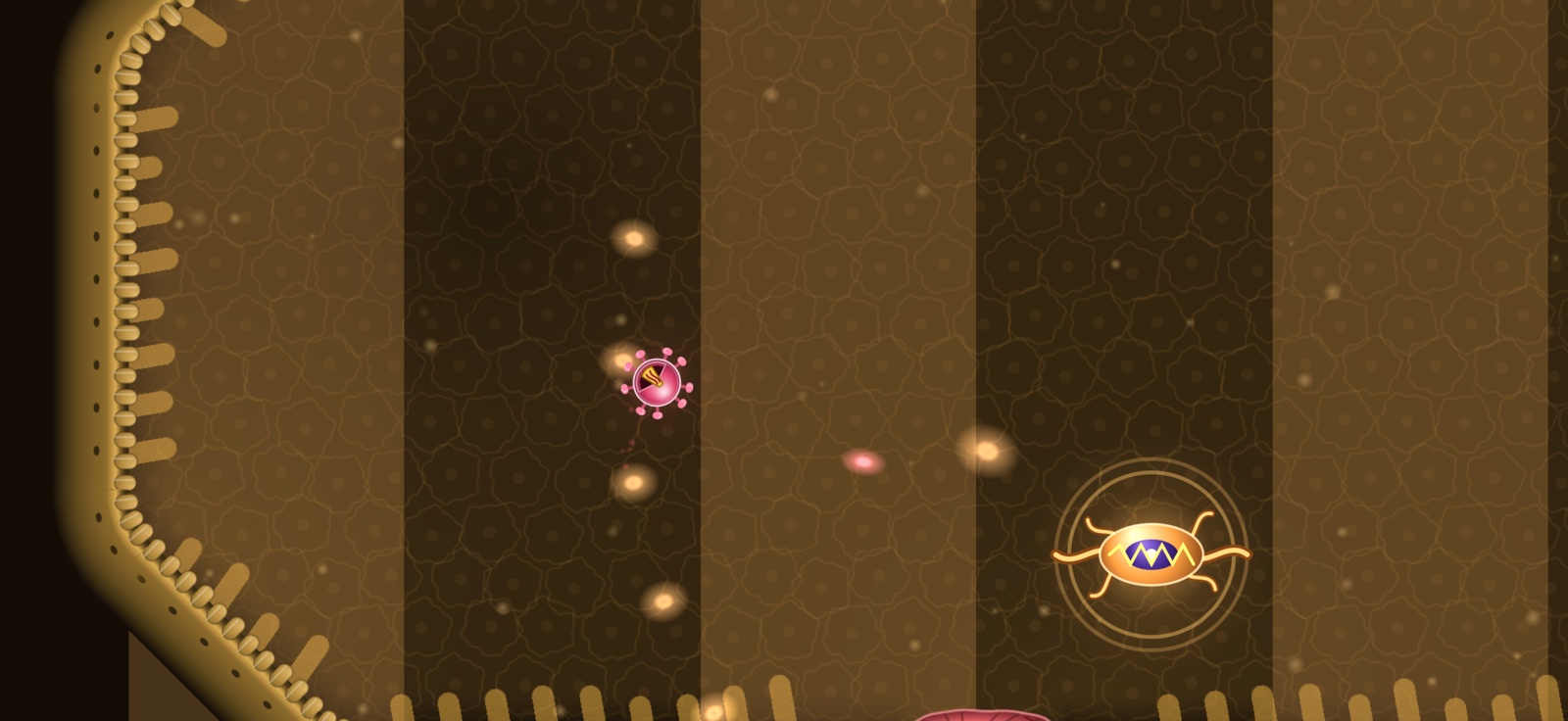
Glowing orbs pause the action and offer traits that last for the rest of the run. They can set cells burning or poisoned, bounce your shots, add orbiting satellites, sharpen your critical hits or turn your dash into a teleport or a charged lunge. Traits stack and come in seven tiers, and a lucky roll can be far stronger than the common version.
At a glance
- Pick one of three: Each card shows its tier and any synergy it would complete.
- Stacking: Taking the same trait again makes it stronger.
- Seven tiers: From Common up to Prismatic, each tier multiplies a trait's strength.
- Deeper is richer: Better tiers turn up more often the deeper you go.
- Growing pool: New trait families and higher tiers open as you level up and your lineage grows.
Synergies
When two traits click
Five traits change how your auto-attack behaves: shots that return, pierce, bounce, burst or chain. Hold any two of them and their pair synergy switches on at once, with no limit on how many you can have. Soon your shots are drilling through lines of cells, ricocheting off walls and arcing from target to target. Lean on one kind of shot for too long, though, and the immune system learns to resist it.
At a glance
- Every pair: Each combination of two shot traits has a synergy of its own.
- Instant: A SYNERGY banner pops up the moment a pair comes together.
- No limit: Hold three or more shot traits and every pair between them works.
- Plan ahead: Trait cards and the head start draft flag synergies you could complete.
- Standout: Cluster Bounce sets off a burst every time a shot bounces off a wall.
Power-ups
Short bursts of raw power
The first cells you kill in a fight can drop power-ups (the last cell never does), so grab them while there is still something to fight. They range from flamethrowers and chain lightning to CRISPR, which cuts apart every cell you touch, and you can run several at once. Traits, room boons and host genes can make them more common, last longer or hit harder.
At a glance
- Elements: There are ten, each playing differently, from healing light to orbiting boulders.
- CRISPR: The rarest one makes you invincible and faster, with music of its own.
- Refills: Grab one you already have and its timer fills right back up.
- Fresh start: Every power-up wears off when you reach a new organ.
- Boosters: Power-up traits make them last longer, show up more often and hit harder.
Loot and lives
Loot, chests and second chances
Cells, chests and cleared rooms drop traits, gear, materials and nucleotides to spend in the Petri Lab. Some loot only drops in one Game Mode, and anything still lying on the floor is lost when you descend. If things go wrong, a Dormant Virion gives you an extra life.
- Vesicle chests: Each one holds gear or nucleotides, plus materials.
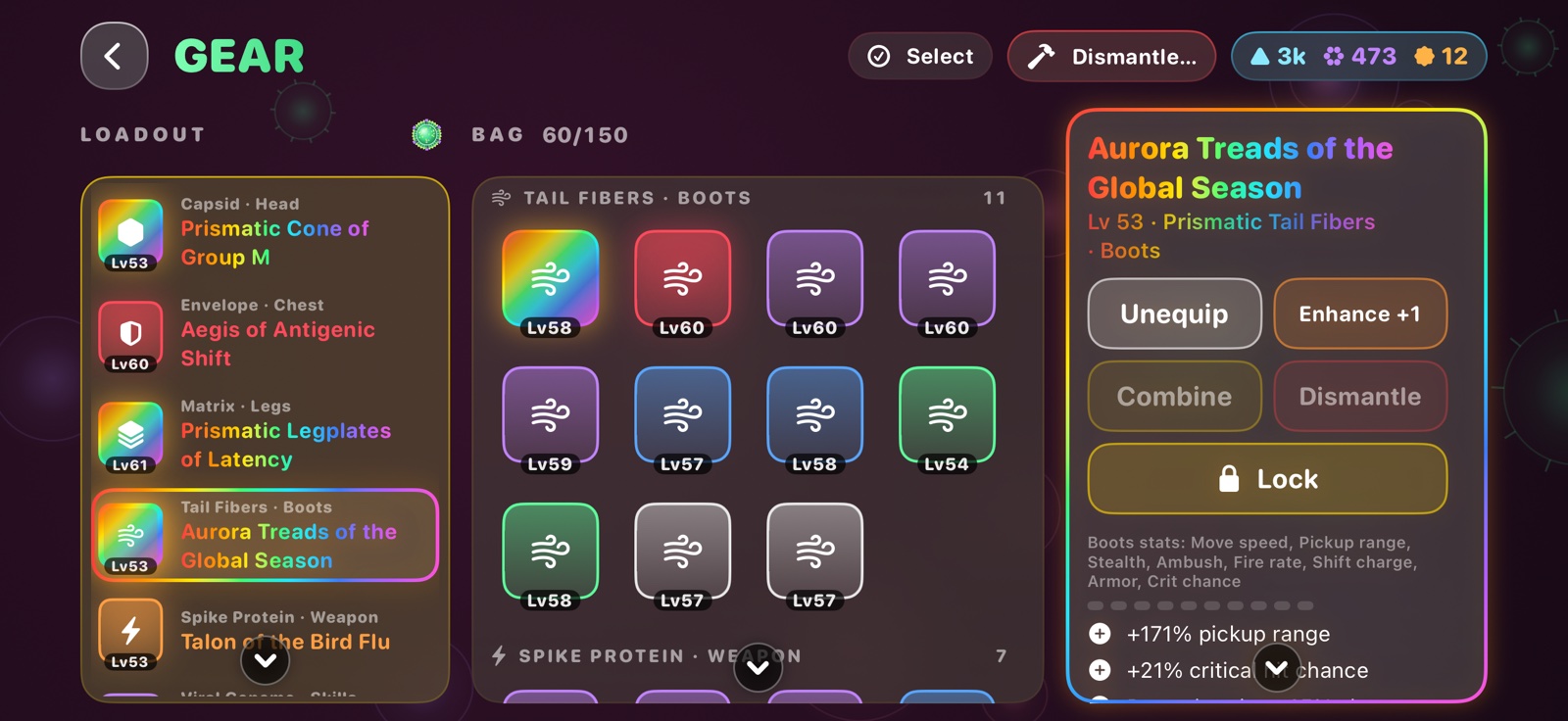
- Gear: Elites drop better pieces more often, and every boss drops one, a named set piece outside Pandemic Game Mode.
- Mode-only loot: RNA drops only in Pandemic Game Mode, and Ribozyme Cores only in Endless Game Mode.
- Going dormant: Your extra life fools ordinary cells, but bosses, Killer T cells and rivals keep hunting.
- Healing: Clearing fights and descending both heal you, and some rooms and power-ups heal more.