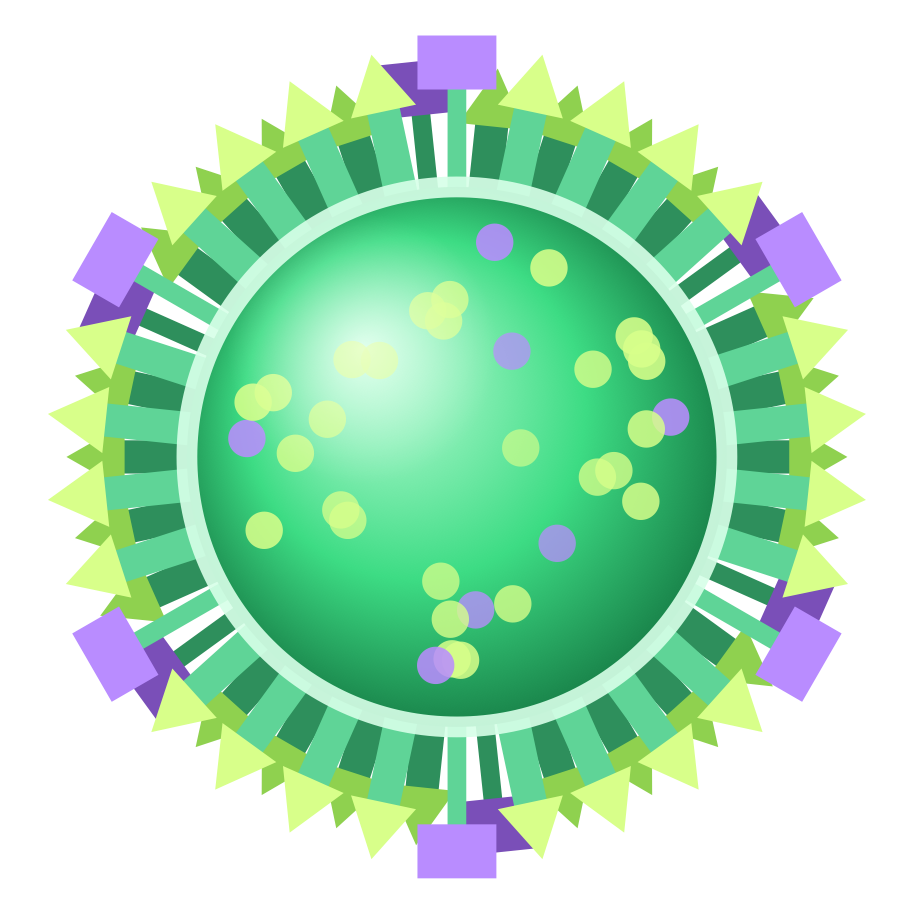
Every Infect and Pandemic Game Mode run starts by landing on a random host: usually a person, sometimes an animal. From Generation 2, each host has a genome tier and hidden traits that help or fight you, revealed the moment you infect them.
Each run drops you straight onto a random host behind an INFECTED title: usually a person, about 1 time in 5 an animal. Its genome tier and traits are revealed as you land.
11 settings, picked at random, decide which animals you can land on: downtown, city park, deep forest, mountain trail, limestone cave, lake, riverbank, fishing boat, cruise ship deck, farm and polar research station
About 1 run in 5 lands on one of the setting's animals instead of a person (in Pandemic Game Mode, the city's own wildlife)
An animal you land on joins the Codex
Host genomes unlock at Generation 2; before that hosts have no traits or conditions
Endless Game Mode runs have no host
From the Codex
The person or animal you infect at the start of a run.
Fun fact: Rarer hosts have bigger effects and pay more nucleotides.
People get a first name and an age from 18 to 84; animals get their species name and an age from 1 to 12 years. A female or male symbol follows each name.
20 default names, from Maria, James and Aiko to Kwame, Hiro and Tomás
In Pandemic Game Mode people take names from the city you're infecting
A person's sex matches their name; an animal's is random
People carry 2 to 5 hidden traits by tier, always at least one that helps and one that fights you. Animals carry their species' signature trait plus 1 to 4 more, always including one that fights back.
Among animals, only farm animals (cow, pig, chicken) can carry Up-to-Date Vaccines
Some traits wait for their system: power-up genes need Power-ups (Level 2), Up-to-Date Vaccines needs Elite Cells (Level 4), tumor genes need Tumors & Metastasis (Level 7)
Some trait names change when you play Retrovirus
Some Pandemic Game Mode cities give every host on the street a trait (Tokyo: Ageing Immune System; Istanbul: Trained Immunity) or make rare genomes 5x as common
From the Codex
The person or animal you infect at the start of a run.
Fun fact: Rarer hosts have bigger effects and pay more nucleotides.
Real world: p53, 'the guardian of the genome', stops damaged cells dividing into tumors
From the Codex
A mass of the body's own cells dividing out of control. Some viruses, like Epstein-Barr (linked to nasopharyngeal carcinoma) and HPV, can help trigger cancers.
Fun fact: Oncolytic viruses are engineered to infect and burst cancer cells; one (T-VEC, a modified herpes virus) is approved to treat melanoma.
People only; appears once Tumors & Metastasis are unlocked
From the Codex
A mass of the body's own cells dividing out of control. Some viruses, like Epstein-Barr (linked to nasopharyngeal carcinoma) and HPV, can help trigger cancers.
Fun fact: Oncolytic viruses are engineered to infect and burst cancer cells; one (T-VEC, a modified herpes virus) is approved to treat melanoma.
Up to 38% softer at Prismatic (never more than 60%)
Carried by every Fruit Bat
Real world: bats dampen inflammation, so they carry viruses without getting sick
From the Codex
Bats are the natural reservoir of some of the deadliest viruses known: Marburg, Nipah, Hendra, rabies, and the ancestor of the 2003 SARS virus. Ebola is strongly suspected to come from bats too. Their immune systems tolerate viruses without the damaging inflammation that sickens other mammals.
Fun fact: Bats are the only mammals that truly fly; the fever-like heat of flight may help them keep viruses in check.
Carried by every Pig and Seal; Nairobi's Livestock Markets in Pandemic Game Mode give it to every host
Real world: pig cells carry both bird- and human-type flu receptors, so strains can swap genes inside them
From the Codex
Pigs are the classic 'mixing vessel' for influenza: their airways carry both bird-type and human-type receptors, so two strains can infect one pig and swap gene segments. The 2009 H1N1 'swine flu' pandemic strain was assembled this way from pig, bird and human flu genes.
Fun fact: Nipah virus first broke out in 1998–99 among Malaysian pig farmers, passed from bats to pigs to people.
+15% damage as Influenza A, −15% damage as any other virus.
Up to ±48% at Prismatic
Carried by every Chicken, Mallard Duck, Herring Gull, Pigeon and Penguin
From the Codex
Wild waterfowl like ducks are the ancient reservoir of influenza A: nearly every subtype (H1–H16, N1–N9) circulates in them, mostly in the gut without making them ill, and spreads through lake and pond water.
Fun fact: Flu virus can stay infectious in cold lake water for months.
Carried by every Dairy Cow, Dromedary Camel and Llama
From the Codex
In 2024, H5N1 bird flu was found spreading among US dairy cattle for the first time, mostly in udders and raw milk, and infected some farm workers. Cattle also suffered rinderpest, a viral plague that was declared eradicated in 2011, only the second disease ever wiped out after smallpox.
Fun fact: The word 'vaccine' comes from vacca, Latin for cow: the first vaccine used cowpox to protect against smallpox.
Carried by every Dog: the one signature that always fights you
From the Codex
Dogs are the main source of human rabies worldwide, causing about 99% of cases. Canine influenza H3N8 jumped from horses to racing greyhounds around 2004, and H3N2 jumped from birds to dogs in Asia.
Fun fact: Rabies is nearly 100% fatal once symptoms start, but fully preventable with vaccination.
Carried by every White-Tailed Deer, Kangaroo and Reindeer
From the Codex
Studies in the US found that white-tailed deer can catch some human viruses and pass them between themselves, keeping old strains circulating after they vanish in people.
Fun fact: Deer also carry chronic wasting disease, caused by a prion: an infectious protein, not a virus.
+15% damage as Retrovirus, −15% damage as any other virus.
Up to ±48% at Prismatic
Carried by every Chimpanzee, Macaque, Capuchin Monkey and Ring-Tailed Lemur
From the Codex
HIV-1 began as SIVcpz, a chimpanzee virus that itself formed when SIVs from two monkey species recombined inside chimps. It crossed into humans around 1920 in southeastern Cameroon, likely through bushmeat hunting, then spread along rivers and railways to Kinshasa.
Fun fact: HIV-2, a milder virus, came separately from sooty mangabey monkeys in West Africa.