Skip to content
StrainBorn
r/StrainBorn Join the beta
StrainBorn Wiki

Keys & Locks

Key Guardians & Genes

Key Guardians, Genes and Sealed Doors

Every organ seals one door with living tissue. The gene that opens it waits in a gene chamber guarded by a key guardian mini-boss, and every organ has a different guardian. Beat it, splice the gene into yourself, and the gene's bonus stays with you for the rest of the run.

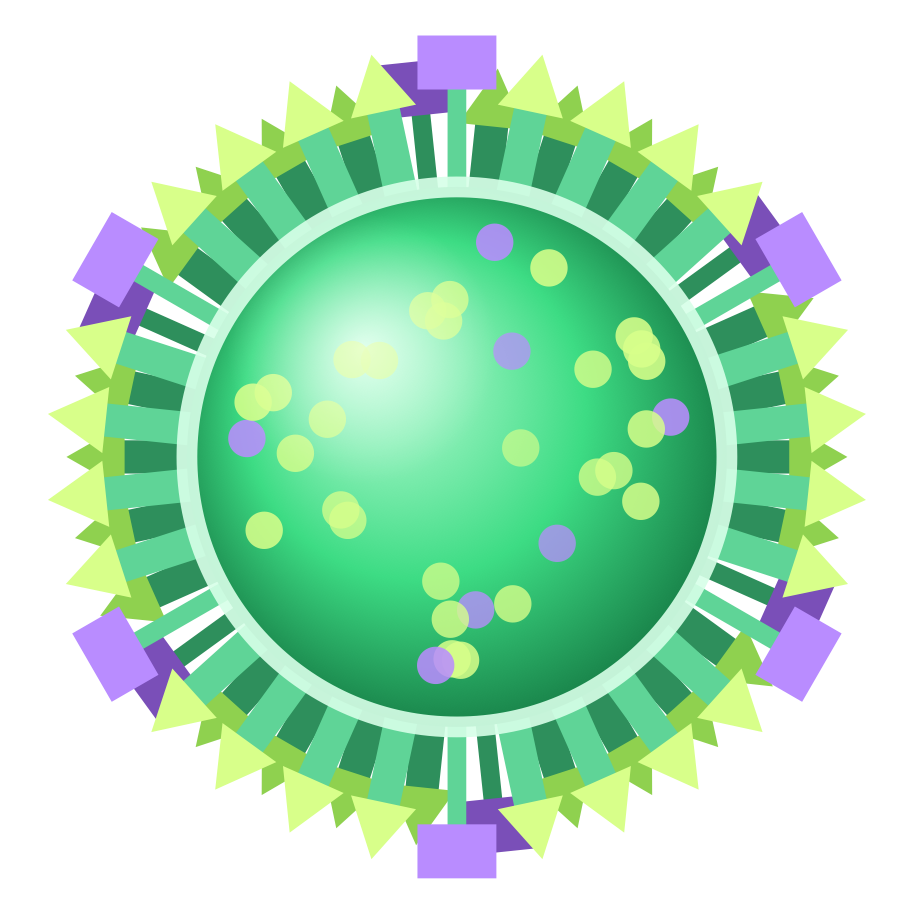
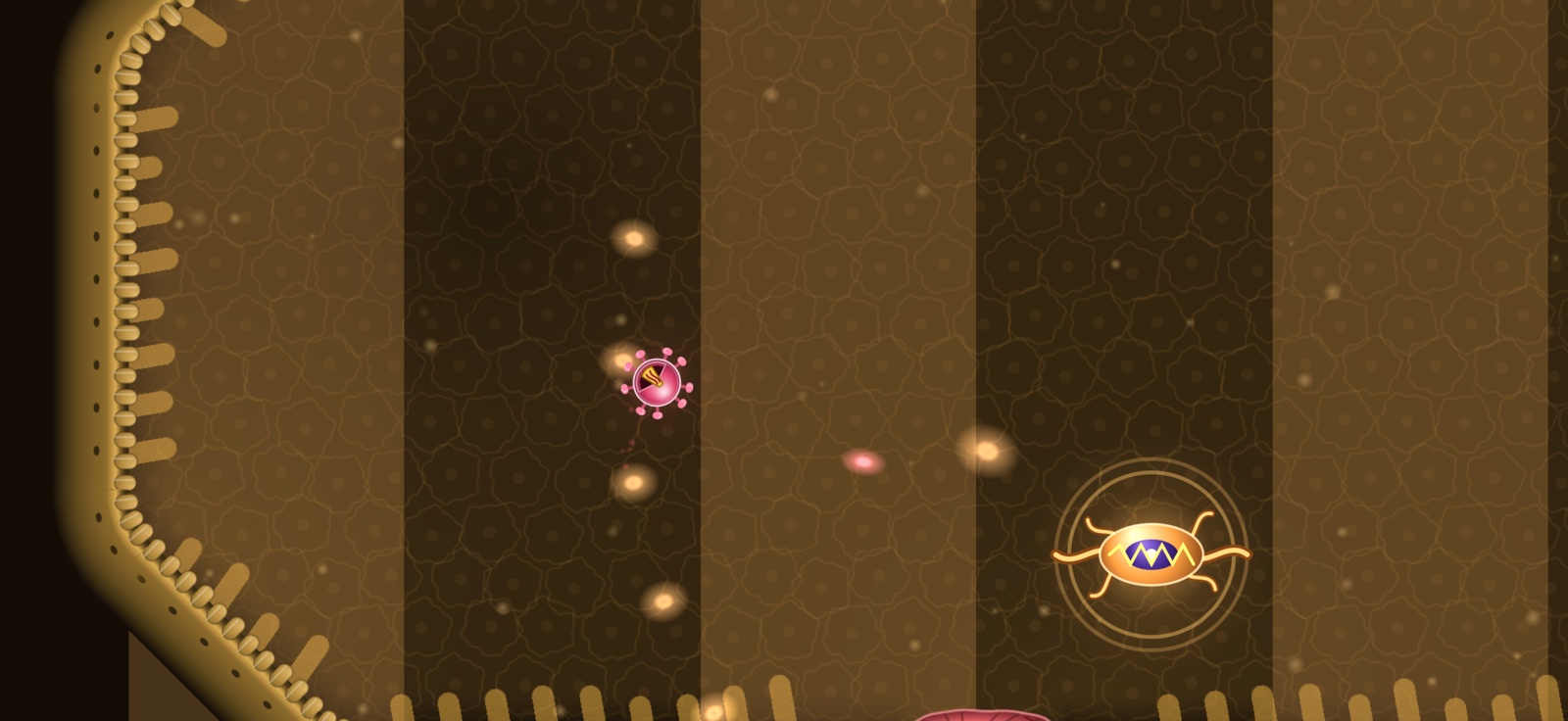
The Retrovirus faces the Cajal Pacemaker, the Gut's key guardian
On this page14
  1. Sealed Doors
  2. Gene Chambers
  3. Mucolytic Enzyme
  4. Fusion Peptide
  5. Plasminogen Activator
  6. Key Guardian Rules
  7. Mucin Colossus
  8. Syncytium
  9. Fibrin Weaver
  10. Reticular Warden
  11. Cajal Pacemaker
  12. Polyploid Hepatocyte
  13. Giant Osteoclast
  14. Betz Cell

Sealed Doors

Every organ

Each organ seals one doorway with a mucus plug, a tight junction or a fibrin clot. It won't open until you carry that organ's gene.

  • About two times in three the sealed door is on the way to the boss. Otherwise it locks the organ's Upgrade Chamber
  • Walk into it without the gene and you're turned back: "SEALED BY A MUCUS PLUG / TIGHT JUNCTION / FIBRIN CLOT: find the Mucolytic Enzyme / Fusion Peptide / Plasminogen Activator somewhere on this organ"
  • Carry the right gene and the door dissolves for good: "DISSOLVED", "FUSED THROUGH" or "CLOT LYSED"
  • Mucus plugs: Nasal Passage, Gut, Bone Marrow. Tight junctions: Lungs, Liver, Brain. Fibrin clots: Bloodstream, Lymph Node
From the Codex

Tissues seal themselves with barriers: thick mucus layers, and tight junctions that zip neighbouring cells together so nothing slips between them.

Fun fact: Some viruses open tight junctions to spread; others are stopped cold by them.

Sealed Door in the Codex

Gene Chambers

Every organ

A fight room holding a strand of foreign DNA you can splice into yourself, guarded by the organ's key guardian.

  • Always placed so you can reach it without passing the sealed door, often in a dead end
  • Entering it announces its KEY GUARDIAN. When the gene appears: "GENE CHAMBER: a strand of foreign DNA you can splice into yourself"
  • When the guardian falls, the gene appears in the middle of the room as a glowing helix. Walk into it to take it
  • Each gene opens its door type and gives a passive bonus for the rest of the run
From the Codex

Viruses carry genes for tools that break host barriers, like neuraminidase that cuts through mucus, or fusion peptides that merge viral and cell membranes.

Fun fact: Neuraminidase is the target of Tamiflu: block it, and new flu virions get stuck to the cell they came from.

Gene Cassette in the Codex

Mucolytic Enzyme

Gene · Organs 1, 5, 7

Dissolves mucus plugs. Mucus no longer slows you.

  • Opens the sealed doors of the Nasal Passage, Gut and Bone Marrow
  • Without it, mucus puddles cut your speed to 40%
  • Guarded by the Mucin Colossus (Nasal Passage), the Cajal Pacemaker (Gut) and the Giant Osteoclast (Bone Marrow)
From the Codex

Large, sugar-coated proteins that give mucus its sticky, gel-like texture.

Fun fact: Influenza's neuraminidase cuts through mucins' sugar chains to reach the cells beneath.

Mucins in the Codex

Fusion Peptide

Gene · Organs 2, 6, 8

Slips through tight junctions. Your dash damages cells you pass through.

  • Opens the sealed doors of the Lungs, Liver and Brain
  • Every dash (or blink) deals 25 damage to each cell it passes through
  • Guarded by the Syncytium (Lungs), the Polyploid Hepatocyte (Liver) and the Betz Cell (Brain)
From the Codex

A short stretch of a viral protein that jams into a cell membrane and helps merge the virus with it.

Fun fact: Enveloped viruses like flu and HIV both use fusion peptides to unload their genomes into cells.

Fusion Peptide in the Codex

Plasminogen Activator

Gene · Organs 3, 4

Dissolves fibrin clots. Platelet clots no longer slow you.

  • Opens the sealed doors of the Bloodstream and Lymph Node
  • Without it, clot patches (left by dying platelets, stellate scar tissue and fibrin attacks) cut your speed to 20% for the 7 s they last
  • Guarded by the Fibrin Weaver (Bloodstream) and the Reticular Warden (Lymph Node)
From the Codex

A stringy protein that weaves platelets into a solid clot. Plasmin, made from plasminogen, breaks it back down.

Fun fact: Clot-busting drugs given after strokes are plasminogen activators.

Fibrin in the Codex

Guardians are mini-bosses labelled KEY GUARDIAN. Each gene's guardian gets meaner every time you meet it deeper in the body.

  • Stages: the second organ with the same gene meets an AWAKENED guardian and the third meets an ANCIENT one. Each stage adds +25% health, +15% damage, 15% faster attacks and more projectiles or adds
  • The first guardian (Nasal Passage) is a lighter test: 40% health and 55% damage
  • Every guardian throws a hook every 2.25–3.25 s after a 0.45 s warning line. 95% of throws are aimed where you're going. If it catches you, you take 8 damage and get reeled in for up to 2.5 s with no dashing out ("HOOKED!")
  • Each one also fires its own aimed shot every 0.9–1.8 s
  • Below half health its attacks come 25% faster
  • Too big to be flung into pits or shoved by hazards
  • Defeat drops nucleotides, Polymerase Shards (6, +3 per stage), Chaperone Proteins (half of 1, +1 per stage), a 35% chance of gear and about a 9% chance of RNA, then the gene
From the Codex

Each organ seals one door until you carry the right gene.

Fun fact: Genes also give a passive bonus, like mucus or clots no longer slowing you.

Genes, Sealed Doors & Key Guardians in the Codex

Mucin Colossus

Guardian · Nasal Passage

A living mucus plug that guards the Mucolytic Enzyme. Stay out of its puddles and fight its pull.

  • Glob Lob: 3 warning circles (the first one right on you) that land as slowing mucus puddles
  • Sticky Spray: a fan of 7 slowing globs
  • Engulf: a pulsing ring around it hauls you in for 1.4 s and digests you every half second while you're inside. Dash out
  • Aimed shot: 3 slowing globs
  • The first key guardian most players meet, tuned as a lighter test
From the Codex

A mucus plug: a thick wad of mucins and trapped debris that can block an airway or duct outright, as happens in asthma and cystic fibrosis.

Fun fact: Mucolytic drugs like N-acetylcysteine break the sugar-protein bonds that make mucus so sticky.

Mucin Colossus in the Codex

Syncytium

Guardian · Lungs

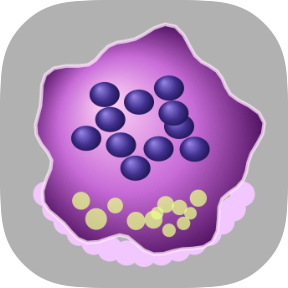
Fused cells with several nuclei in one membrane, guarding the Fusion Peptide. Sidestep its lunges and watch for split-off fragments.

  • Lunge: marks a line for 0.45 s, then charges down it and lands in a ring of 10 membrane shards
  • Fused Volley: a quick stream of 5 shards at where you're heading
  • Membrane Pulse: a double ring of shots, offset and at two speeds
  • Cells Split Off: at 2/3 and 1/3 health it sheds 2 fused fragments that hunt you
  • Aimed shot: a stream of 4
  • Faster on its feet than the other two original guardians
From the Codex

A giant cell with many nuclei, formed when neighbouring cells fuse their membranes into one. Viruses like RSV and measles cause them with their fusion proteins.

Fun fact: Your muscle fibres and part of the placenta are natural syncytia; the placenta's fusion gene came from an ancient retrovirus.

Syncytium in the Codex

Fibrin Weaver

Guardian · Bloodstream

A living clot guarding the Plasminogen Activator. Keep clear of where its fibrin lands.

  • Keeps its distance and circles you while it weaves
  • Clot Ring: 5 warning circles land in a ring around you, each leaving a sticky fibrin clot
  • Fibrin Thread: a long line of 8 slowing shots that stretches out toward you
  • Calls in 2 Platelets ("PLATELETS!")
  • Aimed shot: twin fast, slowing shots
From the Codex

Fibrin is the protein mesh that turns a platelet plug into a solid clot. Plasmin, made from plasminogen, is the enzyme that dissolves it.

Fun fact: Clot-busting stroke drugs like alteplase work by activating plasminogen, exactly what this game's key does.

Fibrin Weaver in the Codex

Reticular Warden

Guardian · Lymph Node

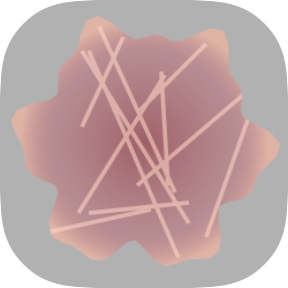
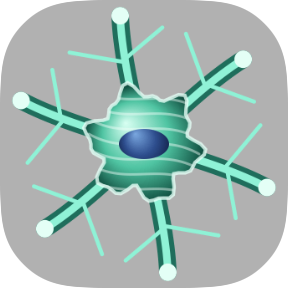
A star-shaped scaffold cell (Awakened) guarding the Plasminogen Activator. It strings a cage of conduit threads around you that closes to nothing.

  • Darts in quick hops to a new spot around you, then rests a moment
  • Conduit Web: 6 anchors land in a ring around you, the threads flicker for 0.7 s, then go live and pull the ring shut over 1.1 s. One side is always left open, or dash across a thread
  • Sweep: it anchors itself and swings a long thread through a wide arc around itself after its reach flashes
  • Conduit Volley: two waves of 6 shots down its arms
  • Aimed shot: twin shots
From the Codex

Fibroblastic reticular cells: star-shaped cells that weave a lymph node's scaffolding, wrapping collagen fibres into conduits that carry small molecules from the lymph straight to waiting immune cells.

Fun fact: Immune cells crawl along this network like roads, and the same cells release the chemokines that guide T cells to their zone.

Reticular Warden in the Codex

Cajal Pacemaker

Guardian · Gut

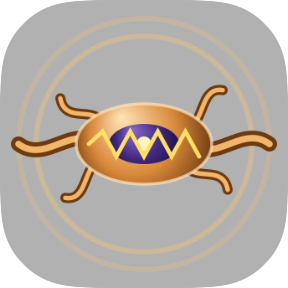
The gut's electrical pacemaker (Awakened), guarding the Mucolytic Enzyme. It sets the whole room contracting.

  • Peristalsis: 2 bands of contraction roll from wall to wall across the whole room, each with a gap to slip through. The gap glows green at the wall first, and getting caught hurts and shoves you
  • Segmentation: the floor splits into 6 strips and alternate strips flash and clench in turn, so you hop from strip to strip
  • Mucin Spray: a fan of 7 slowing globs
  • Aimed shot: one big slowing glob
  • Keeps a middle distance, circling, and pulses with a steady electrical beat
From the Codex

Interstitial cells of Cajal: pacemaker cells in the gut wall that generate the electrical slow waves setting the rhythm of its muscle contractions.

Fun fact: Santiago Ramón y Cajal, who described them in 1893, is also called the father of modern neuroscience and won the 1906 Nobel Prize.

Cajal Pacemaker in the Codex

Polyploid Hepatocyte

Guardian · Liver

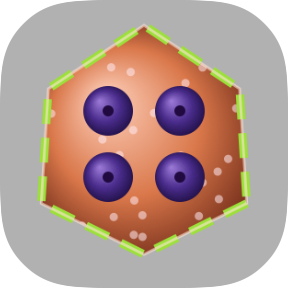
A two-nucleus liver cell (Awakened) guarding the Fusion Peptide. Its rings turn toxic one after another.

  • Circles you at its own distance, switching direction when it bumps into something, and backs off if you corner it
  • Zonation: three rings around itself. Two turn toxic after a 1 s warning while one stays safe, then they flip
  • Bile Canaliculi: a star of 3 crossing lines (6 rays) bursts through where you're going after a 0.9 s warning
  • Bile Lobs: 4 lobs that leave bile pools for 3 s
  • Aimed shot: two side-by-side shots, one per nucleus
From the Codex

Hepatocytes are the liver's main cells and do most of its metabolism and detox. Many carry extra chromosome sets or two nuclei (polyploidy), and each works differently depending on its zone between the portal and central veins.

Fun fact: The liver can grow back from as little as a third of its mass, mostly by its hepatocytes dividing again.

Polyploid Hepatocyte in the Codex

Giant Osteoclast

Guardian · Bone Marrow

A huge bone-dissolving cell (Ancient) guarding the Mucolytic Enzyme. It burrows after you and erupts where it surfaces.

  • Burrowing: it sinks out of reach for 2.2 s while a crack tracks you, then erupts after a 0.7 s warning circle in a ring of 14 bone shards, leaving a resorption pit that hurts to stand in for 5 s. As an Ancient guardian it burrows and erupts twice in a row
  • Acid Etch: 5 lobs that dissolve damaging pits into the floor
  • Trabecular Collapse: bone gives way in a rolling line of 9 marked circles toward you and past
  • Aimed shot: a 3-shot spread
  • It can't be hit while burrowed
From the Codex

A huge cell with many nuclei that dissolves bone: it seals onto the surface and pumps out acid and enzymes under its ruffled border. With bone-building osteoblasts it constantly remodels the skeleton.

Fun fact: Thanks to osteoclasts and osteoblasts, about a tenth of your skeleton is replaced every year.

Giant Osteoclast in the Codex

Betz Cell

Guardian · Brain

A giant motor neuron (Ancient) guarding the Fusion Peptide. Watch the lines: it leaps along them in a chain, then goes refractory.

  • Saltatory Leap: a chain of 3 leaps, each along a line that flashes for 0.55 s and then discharges
  • Refractory: after the chain it greys out for 1.6 s, can't act and takes double damage ("REFRACTORY · HIT IT NOW")
  • Dendritic Discharge: a fan of 7 lightning lines toward you after a 0.8 s warning, then a second fan into the gaps
  • Synaptic Release: vesicles burst on warning circles under you and at 6 spots around you
  • Aimed shot: a stream of 3
  • Flits around you at range
From the Codex

Giant pyramidal neurons of the motor cortex, the biggest nerve cells in the brain. Their axons run all the way down the spinal cord to drive your muscles.

Fun fact: Signals jump between the gaps in an axon's myelin sheath (saltatory conduction) at over 100 metres per second.

Betz Cell in the Codex

See also